By eBikeQuest Editorial Team · Platform Research & Verification
Reviewed by eBikeQuest Editorial Team · Internal verification and editorial review
- Published:
- July 15, 2026
- Updated:
- July 15, 2026
- Reviewed:
- July 15, 2026
What makes a trail beginner-friendly for e-bike riders
Beginner-friendly e-bike trails share traits beyond flat pavement: published e-bike policies, manageable distances between parking and turnaround points, predictable surfaces, and enough width to practice passing without constant road crossings. Crowd density matters too—a technically easy trail packed with tourists can feel harder than a moderate path with open sight lines.
This guide recommends trails near Washington, DC that fit those criteria. It assumes basic bike handling skills and a compliant Class 1 or Class 2 e-bike unless noted otherwise. Class 3 bikes face more restrictions on Maryland bicycle paths and in DC's motorized-bicycle framework.
Read /guides/ebike-classes-explained if you are unsure which class you own. This is a starting-point roundup—not hands-on coaching or a substitute for trail detail pages.
Quick comparison: beginner trails near DC
These trails offer gentler introductions near the capital region. Match your bike class to each trail's policy before heading out.
- Capital Crescent (MD): flat paved; Class 1–2; Metro access; 5–10 mi segments — /trails/maryland/capital-crescent-trail
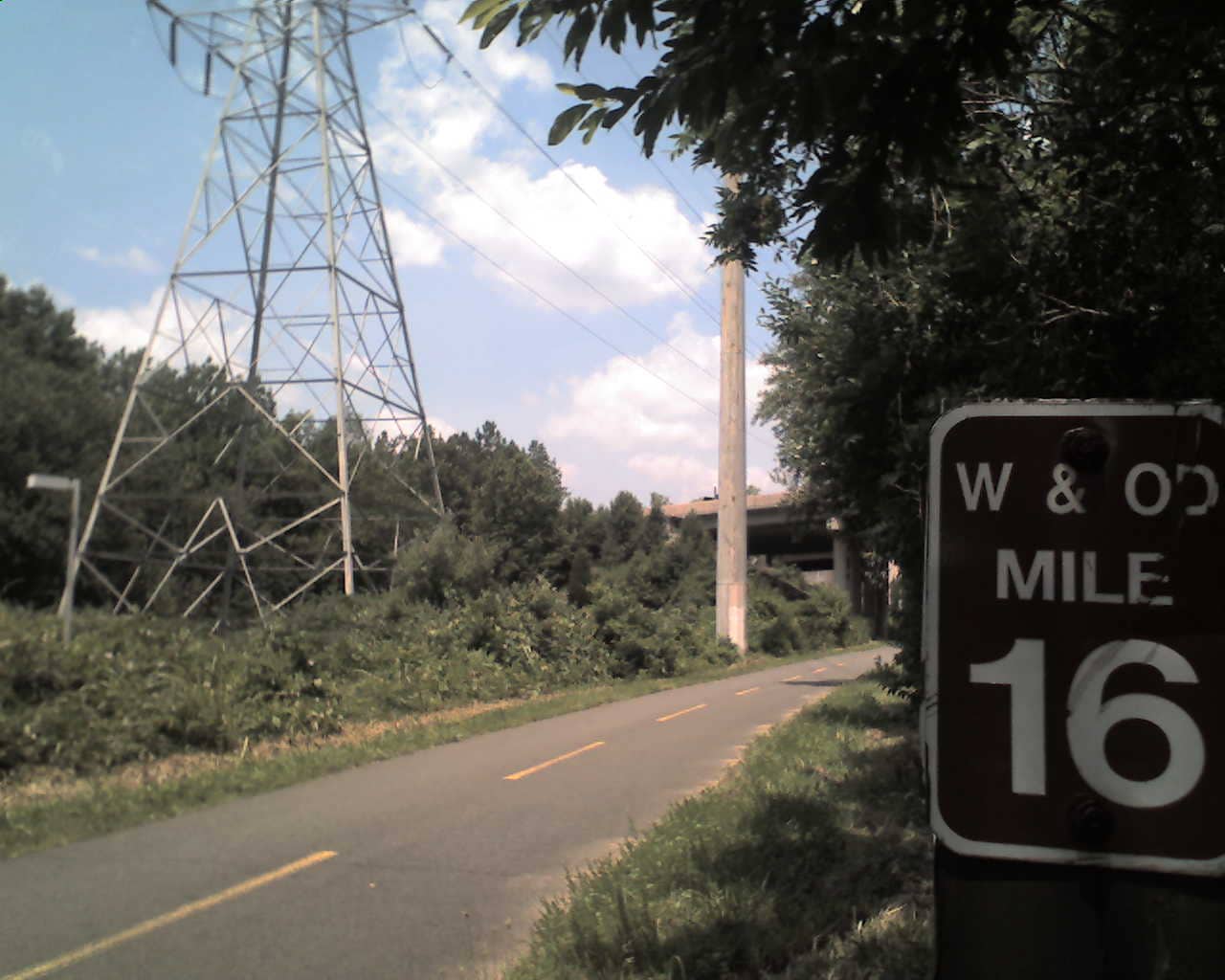
- W&OD (VA, eastern): flat paved; Class 1–3 with 20 mph cap; Vienna/Reston segments — /trails/virginia/washington-and-old-dominion-trail
- C&O Canal DC: crushed stone; Class 1–2; scenic but softer surface — /trails/washington-dc/c-and-o-canal-towpath-dc
- Anacostia Riverwalk (DC): paved connectors; verify segment rules — /trails/washington-dc/anacostia-riverwalk-trail
- Northeast Branch (MD): flat paved; Class 1–2; quieter PG County — /trails/maryland/northeast-branch-trail
- B&A Trail (MD): flat paved; Class 1–3; requires drive to Anne Arundel — /trails/maryland/baltimore-and-ohio-trail
Best first ride: Capital Crescent (Bethesda to Chevy Chase)
A 6–8 mile out-and-back on the Montgomery County Capital Crescent Trail from Bethesda toward Chevy Chase gives beginners smooth asphalt, gentle grades, and an obvious turnaround at Bethesda Row with food and Metro access. Good fit for riders who want to test pedal-assist modes without crushed stone or NPS throttle restrictions.
Maryland limits this bicycle path to Class 1 and Class 2 e-bikes. Montgomery Parks caps motors at 500 watts. Practice passing on the left with a bell or voice announcement—weekend mornings are crowded but slow enough to learn trail etiquette.
If Bethesda parking is full, start from Silver Spring via the Talbot Avenue terminus and ride south toward the same corridor with a different crowd profile.
Best NOVA beginner segment: W&OD Vienna to Reston
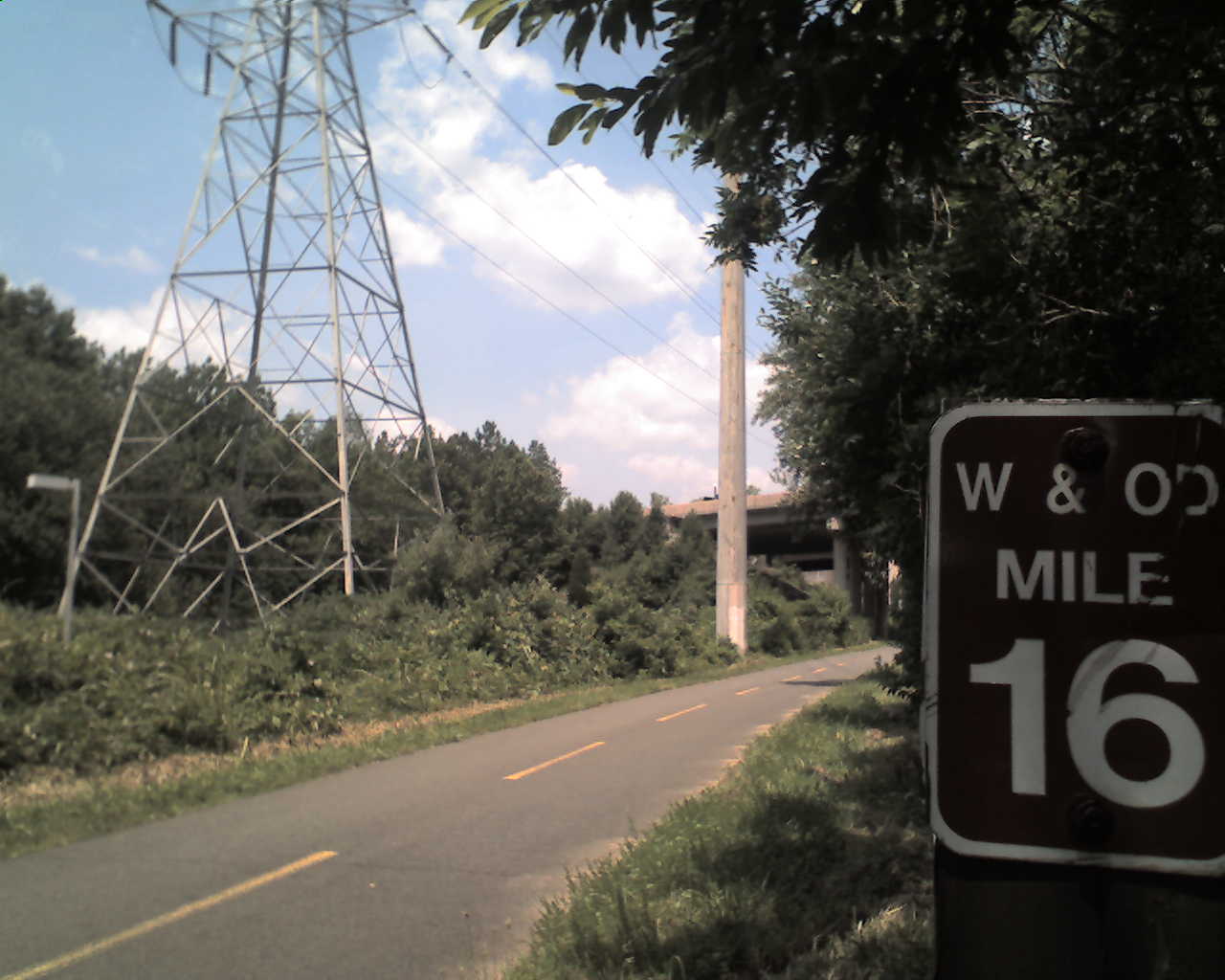
The W&OD between Vienna and Reston offers flat paved rail-trail with playgrounds and parks near crossings—good for riders based in Fairfax County. NOVA Parks permits e-bikes with a 20 mph powered-speed cap. Try a 10-mile out-and-back before attempting longer eastern commuter segments near Shirlington.
Good fit for Class 3 owners who need a legal paved path near DC—unlike Maryland's Capital Crescent, the W&OD allows Class 3 with the operational speed limit. Drop to Eco assist near pedestrians and driveways.
See /guides/riding-ebikes-in-arlington if you plan to reach the W&OD from Arlington via connector trails—the urban segments demand more traffic awareness than the Vienna–Reston core.
Best scenic beginner option: C&O Canal (Georgetown section)
The DC section of the C&O Canal towpath from Georgetown toward Fletcher's Cove offers flat crushed stone with river views—good for beginners comfortable on a softer surface than asphalt. Class 1 and Class 2 e-bikes are permitted under NPS rules with mandatory pedaling and a 15 mph cap.
Wider tires at moderate pressure improve comfort on crushed stone. Avoid throttle-only launches—they violate NPS policy and unsettle hikers on narrow sections. Weekend Georgetown crowds require patience; weekday mornings are gentler for first visits.
Dismount at footbridges as posted. Pair with /trails/washington-dc/c-and-o-canal-towpath-dc for parking at Georgetown waterfront or Fletcher's Cove.
Best quieter beginner option: Northeast Branch Trail
Prince George's County's Northeast Branch Trail sees less tourist traffic than Capital Crescent or Mount Vernon. Flat paved miles along the stream corridor suit beginners in College Park, Hyattsville, or Riverdale Park who want practice without weekend tourist buses.
PG Parks permits 500-watt pedal-equipped e-bikes—aligning with Class 1 and most Class 2 models. Verify connections toward Bladensburg before assuming continuous mileage; some Anacostia River Trail segments restrict e-bikes.
Good fit for riders who have done a few short neighborhood rides and want a dedicated path without driving to Virginia.
Trails beginners should approach carefully
The Mount Vernon Trail is paved and flat in places but draws heavy crowds, blind curves, and strict NPS pedal-assist rules—better as a second or third trail after you are comfortable passing on the W&OD or Capital Crescent.
Rock Creek Trail in DC mixes paved and restricted segments with Class 1 limits on many routes—navigation and policy research add complexity beginners do not need on day one.
Long crushed-stone corridors like the full C&O toward Great Falls reward preparation beginners may not have yet—stick to the short DC section first.
E-bike class, gear, and pre-ride checks for beginners
Class 1 bikes maximize trail access in this roundup. Class 2 bikes are appropriate on most listed trails but require pedaling on NPS segments. Class 3 bikes should use the W&OD or B&A rather than Maryland bicycle paths like Capital Crescent.
Bring a helmet even when not legally required for adults—Virginia requires helmets for all Class 3 riders; DC requires helmets for riders under 16. Carry water, check tire pressure, and confirm battery range for your planned out-and-back with margin for headwinds.
Read /guides/do-you-need-a-license-for-an-ebike and /guides/where-can-you-ride-an-ebike for licensing and sidewalk context before mixing trail rides with urban connectors.
How to choose your first DC-area trail
Stay in Maryland with Capital Crescent if you have Class 1 or Class 2 and Red Line access. Choose W&OD Vienna–Reston if you are in Fairfax or have Class 3. Pick C&O Georgetown if you want scenery and can handle crushed stone. Pick Northeast Branch if you want lower crowds in Prince George's County.
Ride weekday afternoons for your first visit when possible. Start with 45–90 minutes of riding—not a full battery depletion test. Build skills on /guides/mid-atlantic-trail-etiquette before joining group rides.
Laws: /laws/virginia, /laws/maryland, /laws/washington-dc. Broader trail comparison: /guides/best-ebike-trails-near-washington-dc.
Bring a friend or ride during daylight for your first outing. Practice shifting assist modes on flat pavement before you need them on crowded segments. If you feel overwhelmed, shorten the ride and return the same way rather than pushing into unfamiliar connectors toward DC bridges or NPS segments with different rules.
FAQ
Start with a 6–8 mile out-and-back on Capital Crescent from Bethesda toward Chevy Chase, or the W&OD between Vienna and Reston. Both offer flat pavement and obvious turnaround towns. Avoid Mount Vernon and long C&O segments until you are comfortable passing in crowds.