Trail highlights
- 18-mile NPS riverfront trail from Mount Vernon to Roosevelt Island
- E-bikes allowed with mandatory pedaling and 15 mph trail limit
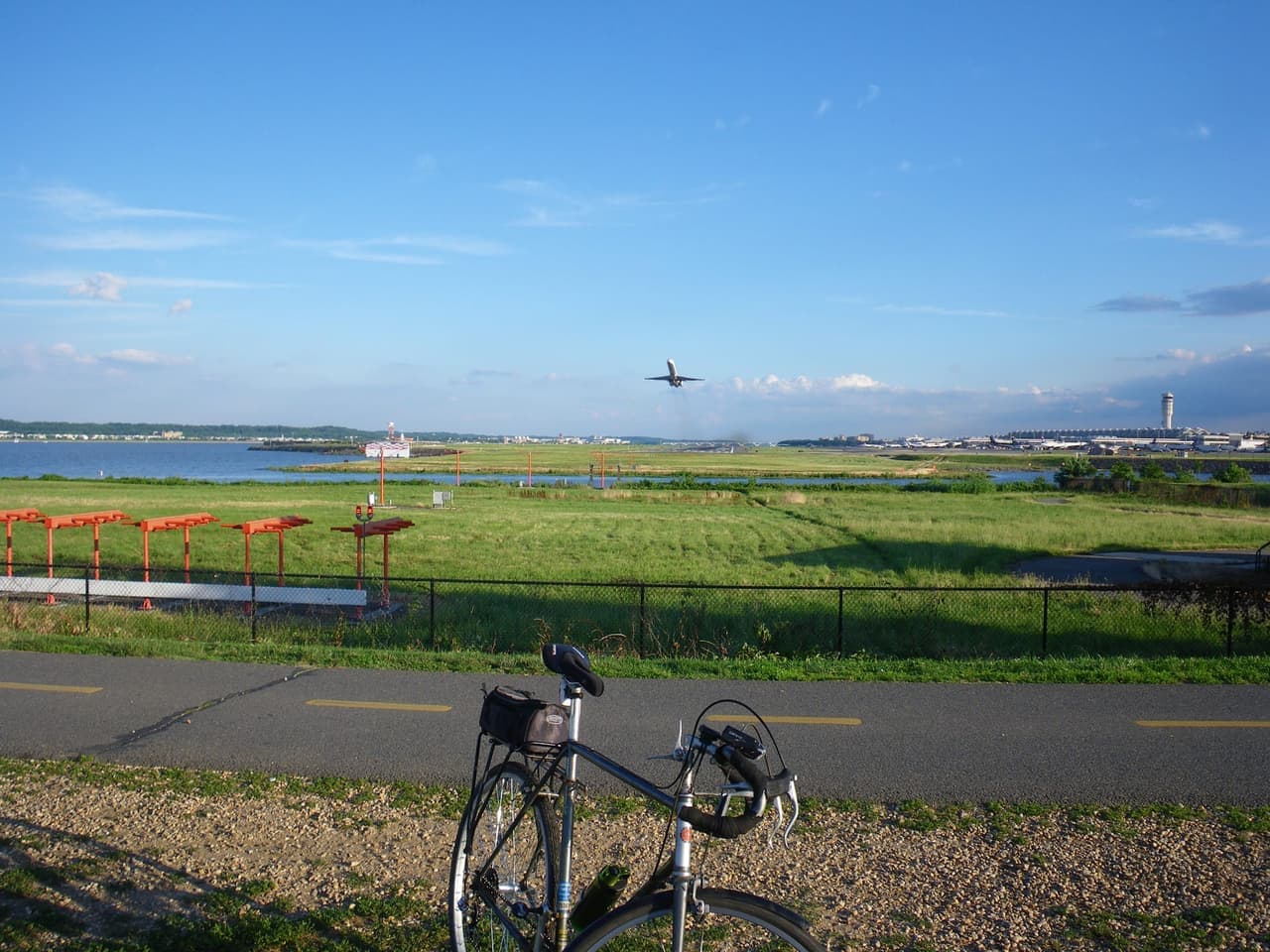
- Potomac views, Dyke Marsh, Old Town Alexandria, and airport scenery
- Links to Potomac Heritage Trail and DC bridge crossings
- One of the busiest multi-use paths in the Mid-Atlantic
Route Overview
The Mount Vernon Trail is an 18-mile paved multi-use path along the Virginia side of the Potomac River, managed by the National Park Service as part of George Washington Memorial Parkway. It stretches from George Washington's Mount Vernon estate north through Alexandria, Belle Haven, Old Town connectors, Reagan National Airport viewpoints, and Arlington waterfront parks to Theodore Roosevelt Island near Key Bridge.
Built in the 1970s on NPS land paralleling the parkway, the trail is flat to gently rolling with frequent curves, bridge segments, and scenic overlooks. It is one of the busiest shared-use paths in the country—NPS reports up to 80,000 visits per month—mixing tourists, commuters, runners, and recreational cyclists.
Surface quality is generally good asphalt, but narrow sections, blind curves, and weekend crowding near Old Town Alexandria and Gravelly Point demand attentive riding. The trail links to the Potomac Heritage Trail, regional bridges into Washington, DC, and local Alexandria bike lanes.
E-Bike Access and Rules
The National Park Service authorizes e-bikes on the Mount Vernon Trail wherever traditional bicycles are allowed. NPS defines an e-bike as a two- or three-wheeled cycle with fully operable pedals and an electric motor of less than 750 watts (1 horsepower). E-bikes are prohibited where traditional bicycles are prohibited.
Critical NPS restriction: except where public motor-vehicle use is allowed, using the electric motor to propel an e-bike without pedaling is prohibited. That effectively bans throttle-only riding on the trail—even for Class 2 bikes—while pedal-assist operation remains permitted. This rule appears in the GWMP Record of Determination for e-bikes and the park planning documentation.
The GWMP Superintendent's Compendium adopts Virginia state law for bicycle and e-bike operation and adds trail-specific limits: a 15 mph speed limit on designated trails including the Mount Vernon Trail, stay-right travel, single-file riding when congested, and audible warnings before passing. Class 1 and Class 2 e-bikes that meet the NPS definition and Virginia statute fit comfortably within these rules when ridden with pedaling and speed discipline.
- Allowed: e-bikes meeting the NPS 750-watt, operable-pedal definition where bicycles are permitted.
- Prohibited: motor-only propulsion on the trail; riding where bikes are banned; exceeding the 15 mph trail speed limit.
- Required conduct: pass on the left with bell or voice; yield to slower users; leash pets to six feet.
- Official sources: NPS GWMP e-bike Record of Determination; Superintendent's Compendium; Mount Vernon Trail mile 0 safety page.
Trail Highlights
River views dominate the experience: Mount Vernon's wooded approaches, Dyke Marsh boardwalks, Old Town Alexandria's waterfront, the airport plane-spotting stretch, and Georgetown's Key Bridge backdrop each offer distinct scenery. Interpretive signage and memorial sites along GWMP add historical context.
The trail functions as both recreation and transportation. Commuters connect Alexandria and Arlington job centers; tourists link Mount Vernon to DC monuments via bridge connections. Plan turnaround points at Belle Haven, Old Town, Gravelly Point, or Roosevelt Island based on crowd tolerance.
- 18 miles of Potomac riverfront pavement from Mount Vernon to Roosevelt Island
- Views of DC monuments, Reagan National Airport, and Dyke Marsh
- Connections to Potomac Heritage Trail and DC bridge crossings
- Historic Mount Vernon estate at the southern terminus
- Flat, accessible riding suitable for endurance e-bike touring at modest assist

Access and Parking
Parking is available at most major trail destinations except Lady Bird Johnson Park and the Navy and Marine Memorial, per NPS trail brochures. Mount Vernon Circle provides southern access with estate parking (fees may apply for estate visitors). Belle Haven, Alexandria waterfront lots, and Reagan National area connectors serve mid-trail entry.
Northern access includes Theodore Roosevelt Island and nearby Rosslyn or Georgetown bridge approaches—parking is limited and competitive on weekends. Metro stations within riding distance include King Street–Old Town, Braddock Road, and Rosslyn, making combined transit-and-e-bike days feasible from the District or Alexandria.
E-bike riders should avoid leaving batteries or accessories visible in parked cars at popular riverfront lots. Arrive early on spring and fall weekends when Gravelly Point and Old Town fills quickly.
Riding Tips for E-Bikers
Treat the Mount Vernon Trail as a social path, not a time trial. Your e-bike may assist to 20 mph under Virginia law, but NPS caps trail speed at 15 mph—and courteous riders go slower in crowds. Pedal continuously when using assist to comply with the no-throttle-without-pedaling rule.
Blind curves under parkway overpasses and narrow boardwalk approaches require early slowing. Runners with headphones and wandering tourists near Mount Vernon are common; announce passes well in advance.
Wind off the Potomac can drain batteries on northbound return legs. Carry a front light for tunnel-like underpasses and plan charging if you extend into DC via bridge connections.
- Pedal whenever the motor is engaged—do not rely on throttle-only travel.
- Stay at or below 15 mph on the trail regardless of assist capability.
- Pass on the left only when sight lines are clear; leave two bike lengths before merging right.
- Dismount or walk through the most congested waterfront pinch points on busy weekends.
Seasonal Notes
The trail is open year-round, but summer heat, humidity, and afternoon thunderstorms are common. Cherry blossom season and fall foliage weekends produce peak congestion. Winter ice on shaded boardwalks and bridge decks can persist for days—consider postponing e-bike trips after hard freezes.
Special events near the airport, Mount Vernon, and national holidays increase parking pressure. NPS may post temporary closures for maintenance on bridges and boardwalks; check nps.gov/gwmp before long shuttle rides.
Nearby Trails and Resources
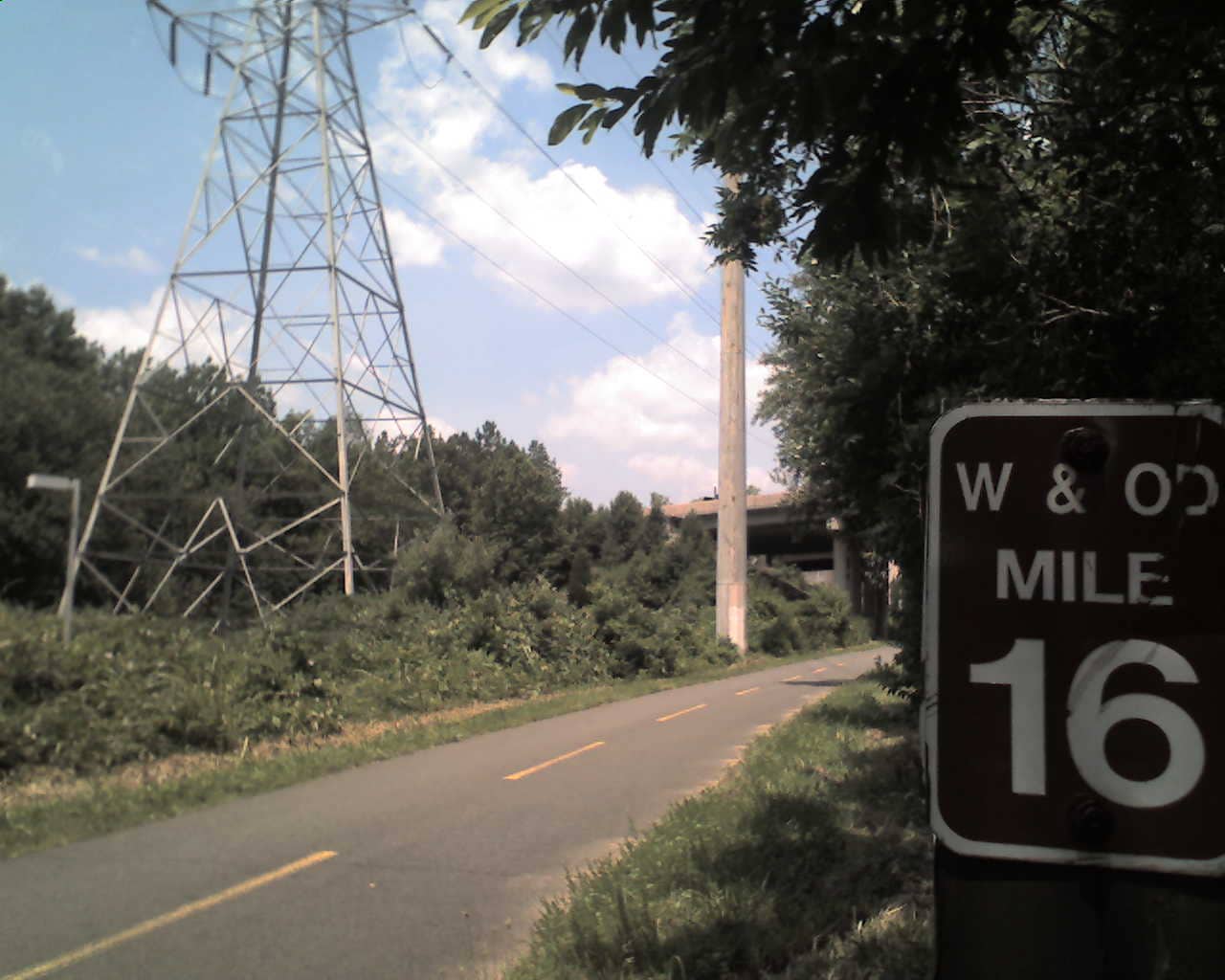
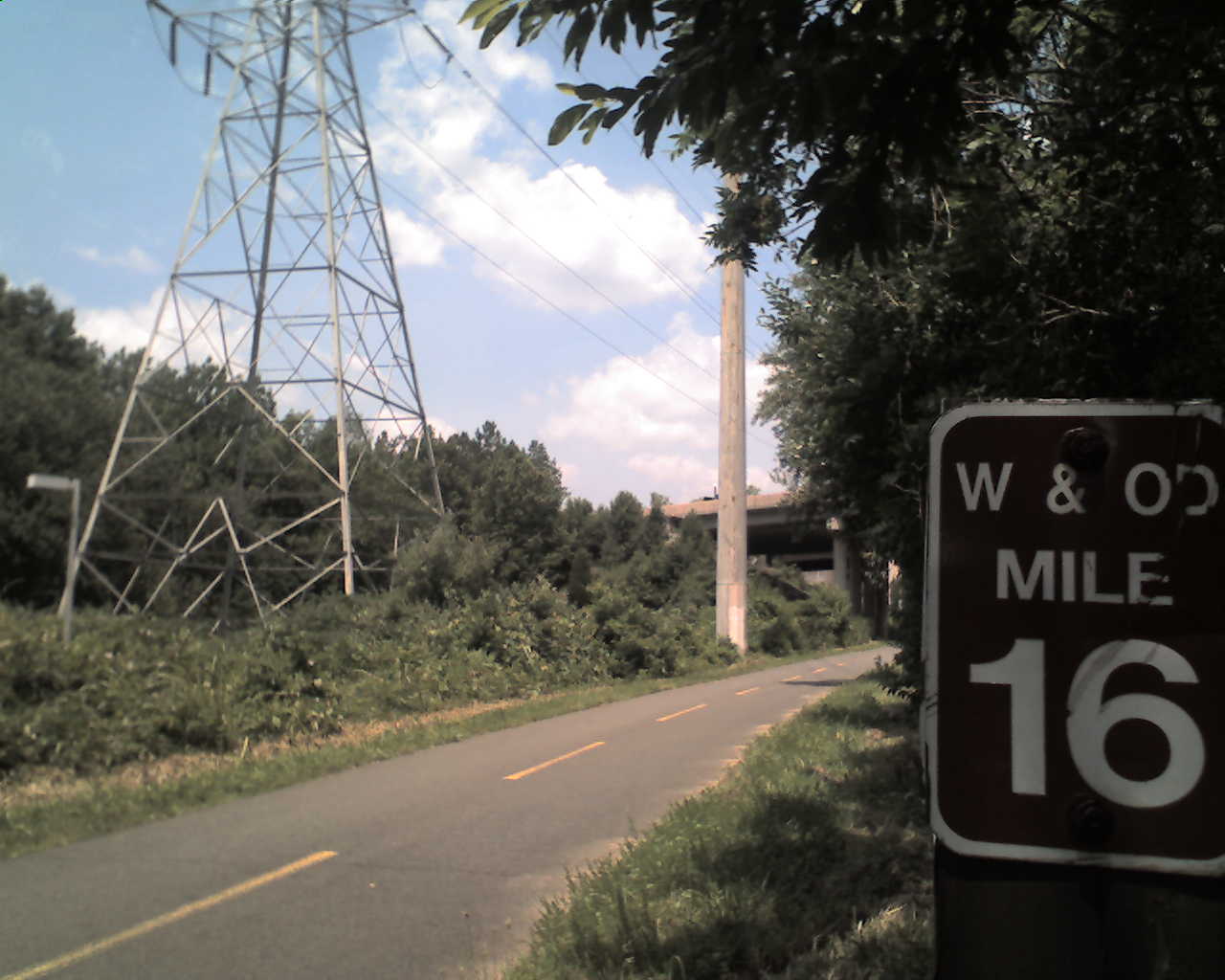
Potomac Heritage Trail segments branch from GWMP nodes for mixed-surface exploration. Across the river, DC trails follow different rules—DC's 20 mph motorized-bicycle definition does not use the three-class framework. The W&OD Trail connects via Alexandria and Arlington on-road routes with distinct NOVA Parks e-bike guidance.
Review eBikeQuest's Mid-Atlantic trail etiquette guide for passing and speed practices that help e-bikes remain welcome on crowded NPS paths.
E-bike policy
Class 1 and Class 2 e-bikes are generally permitted on the Mount Vernon Trail; verify current NPS and local posted rules before riding.
Access points
- Mount Vernon — Southern terminus at George Washington's estate; paid estate parking may apply.
- Belle Haven / Alexandria waterfront — Mid-trail river access with multiple parking areas.
- Gravelly Point — Popular plane-spotting segment; crowded on weekends.
- Theodore Roosevelt Island — Northern terminus area near Rosslyn and Key Bridge.
Seasonal notes
Busy year-round with peak crowds spring through fall and on holidays. Summer heat and storms, winter ice on shaded bridges, and event-related parking limits affect planning. Confirm nps.gov/gwmp for closures.
FAQ
No. NPS prohibits using the electric motor to move an e-bike without pedaling on GWMP trails except where public motor vehicles may drive. Operate Class 2 bikes in pedal-assist mode on the Mount Vernon Trail.