Trail highlights
- 20-mile crushed-stone rail-trail through Baltimore County
- Class 1 and Class 3 pedal-assist e-bikes allowed by DNR
- Monkton Station trailhead and rural scenery
- Connection to Pennsylvania Heritage Rail Trail
- Rail-Trail Hall of Fame inductee
Route Overview
The Northern Central Trail—officially the Torrey C. Brown Rail Trail since 2018— is a 20-mile crushed-stone rail-trail managed by Maryland Department of Natural Resources through Baltimore County. It follows the former Northern Central Railway from Ashland near Cockeysville north to the Pennsylvania state line, continuing into York County as the Heritage Rail Trail County Park.
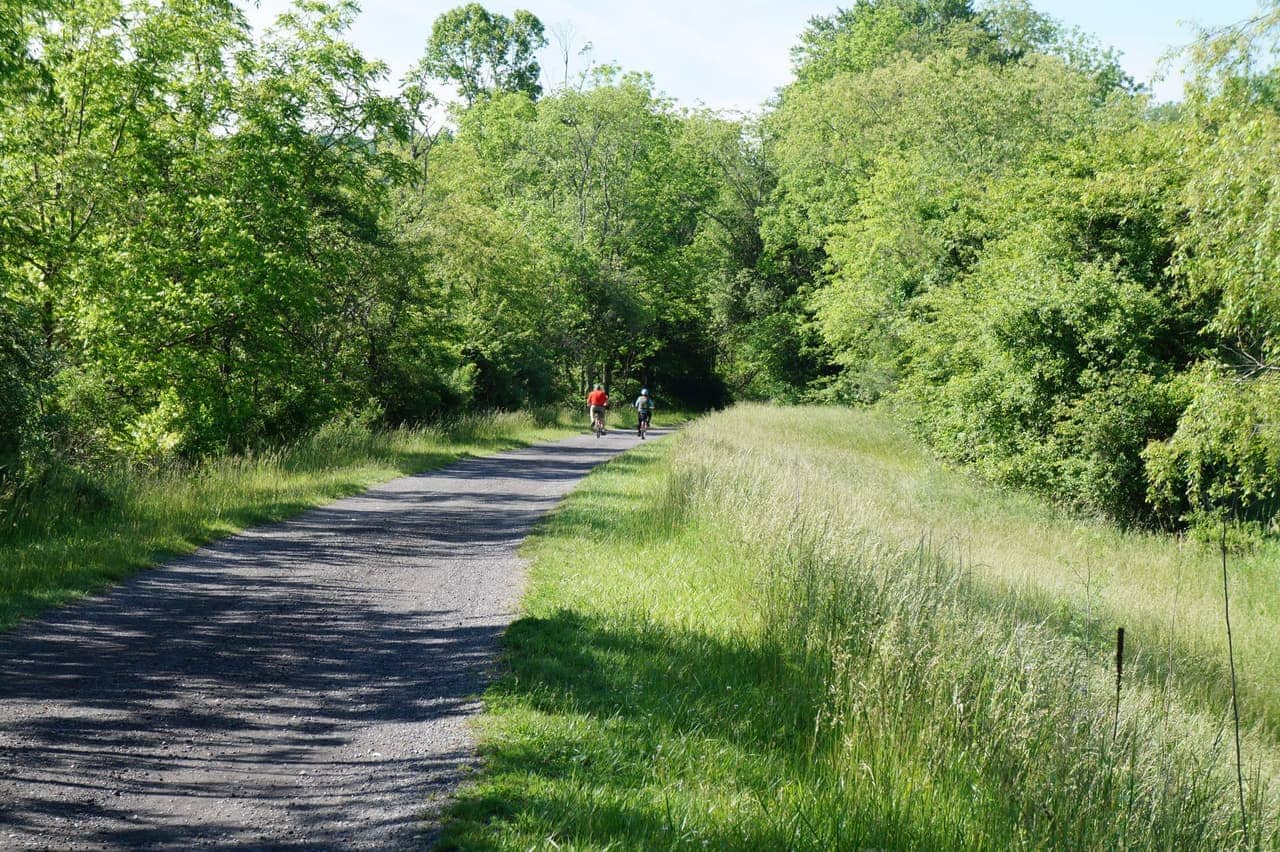
The surface is compacted limestone dust, firm enough for hybrid and touring bikes in dry weather but softer after heavy rain. The corridor passes through historic communities including Phoenix, Monkton, White Hall, and Freeland, with long wooded cuts, stream crossings, and occasional farm views.
The trail is a Rail-Trail Hall of Fame inductee and part of the proposed Grand History Trail linking Washington, Baltimore, and York. It serves roughly 400,000 users annually—expect equestrians on permitted sections, hikers, and touring cyclists in addition to local riders.
E-Bike Access and Rules
The Torrey C. Brown Rail Trail was one of the first Maryland state trails to allow e-bikes. DNR permits Class 1 and Class 3 pedal-assist e-bikes on the trail under its e-bike regulation framework. Both classes require the rider to pedal for motor assistance; Class 3 bikes assist up to 28 mph on roads but riders must obey trail speed limits in practice.
Class 2 throttle-assist e-bikes are not permitted on the Torrey C. Brown Trail except when the device qualifies as an adaptive bicycle for a rider with a disability, per DNR's distinction between pedal-assist and throttle-dominant devices. This aligns with DNR's emphasis on pedal-assist access on state rail-trails.
Maryland Transportation Article § 21-1205.2 treats compliant e-bikes as bicycles on most paths, but DNR land managers can designate restrictions. On the NCR, yield to horses—slow or stop when passing equestrians and avoid sudden motor engagement near horses. Helmets required for riders under 16.
- Allowed: Class 1 and Class 3 pedal-assist e-bikes per DNR policy.
- Restricted: Class 2 throttle e-bikes except adaptive mobility devices.
- Surface: crushed stone—750-watt state maximum applies; use reasonable trail speeds.
- Source: dnr.maryland.gov Bike and E-bike Regulation FAQ; Maryland § 21-1205.2.
Highlights Along the Trail
The restored Monkton train station serves as a popular trailhead with a café nearby on weekends. The Blue Mount Station area and White Hall offer rural scenery and parking. Crossing into Pennsylvania connects to York's Heritage Rail Trail for a 44-mile combined corridor.
Fall foliage along the Gunpowder River tributaries and spring wildflowers in cuttings make this trail a scenic alternative to paved urban paths. The gentle 1–2% grade northbound suits long-distance e-bike touring with conservative assist.
- Monkton Station trailhead and café stop
- 20-mile Maryland corridor through Baltimore County countryside
- Connection to Pennsylvania Heritage Rail Trail at the state line
- Rail-Trail Hall of Fame route with equestrian sharing on sections
- Part of the proposed Grand History Trail network
Access and Parking
Primary trailheads include Ashland (Paper Mill Road area near Cockeysville), Phoenix, Monkton, White Hall, and Freeland. Monkton fills quickly on autumn weekends; Freeland and northern lots offer more space.
A Maryland State Park day-use fee may apply at certain trailheads—verify current fee stations and annual pass acceptance on DNR's website.
- Ashland Trailhead—southern end near Cockeysville.
- Monkton Station—central access with amenities.
- White Hall and Freeland—northern Baltimore County access.
- Pennsylvania state line—connection to Heritage Rail Trail.
Riding Tips
Wider tires (38 mm+) improve comfort on limestone dust. After rain, avoid riding through deep soft spots that rut the tread. When passing horses, stop and ask riders whether to proceed or wait—they may spook at silent e-bike approaches.
An out-and-back from Monkton to the state line and return is roughly 30 miles—a solid e-bike workout. Water is limited on trail; stock up in Monkton or White Hall.
Class 2 riders should choose the B&A Trail or Indian Head Rail Trail instead unless using an adaptive device.
The Gunpowder Falls State Park boundary lies near the southern trailhead—some riders combine a NCR ride with short road connectors to Loch Raven Reservoir viewpoints. Railroad history interpretive signs at Monkton explain the 1972 Tropical Storm Agnes damage that ended freight service on the Northern Central line.
If you continue into Pennsylvania, York County maintains the Heritage Rail Trail with compatible crushed-stone tread. Carry identification and note that trail rangers in both states enforce dawn-to-dusk access and alcohol prohibitions on the corridor.
DNR renamed the trail for Secretary Torrey C. Brown in 2018 to honor his role opening Maryland's first rail-trail in 1984. The corridor remains one of the busiest e-bike-friendly crushed-stone routes in the Baltimore metro area.
Seasonal Notes
The trail is open year-round, but spring thaws soften the surface. Summer shade keeps the corridor cooler than open paved trails. Peak leaf season in October draws heavy parking demand at Monkton.
Winter riding is popular when the stone surface freezes hard; fresh snow may make the trail impassable for skinny tires.
Nearby Trails and Resources
The B&A Trail (paved, Anne Arundel County) and Jones Falls Trail offer complementary surfaces near Baltimore. The Western Maryland Rail Trail allows Class 1 e-bikes on a paved parallel corridor near the C&O Canal.
DNR and the Rails-to-Trails Conservancy publish maps for the Torrey C. Brown and Heritage Rail Trail connection.
E-bike policy
E-bikes permitted on the NCR Trail under Maryland e-bike law.
Access points
- Monkton Station — Central trailhead with parking; popular weekend access.
- Ashland Trailhead — Southern end near Cockeysville and Paper Mill Road.
- Freeland / State Line — Northern access toward the Pennsylvania border.
Seasonal notes
Open year-round; spring mud softens the limestone tread. Peak foliage weekends fill Monkton parking. Winter riding best when surface is frozen hard.
FAQ
Yes. DNR permits Class 1 and Class 3 pedal-assist e-bikes on the Torrey C. Brown Rail Trail. Class 2 throttle e-bikes are not permitted except as adaptive mobility devices.